
刊於傳記文學第660期 2017年5月 人生的轉捩點/張朋園口述‧何邦立記錄整理
人生的轉捩點
張朋園
1937年中日戰爭爆發之後,中國陷於苦戰,軍中的醫藥衛生簡陋,甚至於談不上設備,一批在北京協和醫學院的英美派醫生,在林可勝教授登高一呼領導下,投入紅十字會的軍中救護工作,在愛國熱情的支持下,組織了紅會救護總隊,前往戰地前線支援救護。當時軍中缺少醫護人員,人手不足,工作難於推動,因此林可勝決計從訓練醫護人員著手,一面訓練,一面投入救護工作,戰時軍用衛生人員訓練所的成立,就是為了改善軍中醫療衛生、救死扶傷而來的。
1943年的夏天,當時我17歲,在貴陽私立正誼初中念了一年半後,去商場作學徒,17歲已經不小了,我自己心裡在盤算,未來應該怎麼求變,就這樣一輩子下去嗎 ? 寧願做一個小商人,那不是我想要的,我要改變,要有所突破。 註1
我在報紙上看到一則廣告,軍政部戰時軍用衛生人員訓練所「高級護理職業班」的招生簡章中寫道 ,只要初中畢業或同等學歷,都可以投考,免學費、管吃住、還有書讀,何樂而不為。四年期間除軍事教育外,要補修高中課程,國文、英文、數理化等,而後正式接受護理職業訓練,包括一年的醫院實習。後來才知道林可勝他們的苦心所在,降低入學資格是不得已的,中國在二十世紀上半,一切落後,教育極不普遍,抗戰時期動盪流離情況更壞。依照醫學院的標準根本不可能找到高中畢業生,不得已只有降低為初中畢業。我很高興可以同等學歷投考,而且一考就被錄取了,這是我人生的第一個轉戾點。
我的貴陽同鄉好友,吳奭 註2 長我兩歲,我們的學歷背景相同,也在商場作學徒,他晚一個月也看到招生廣告,但這次是召軍醫班。入學標準與護理班完全一樣,但給予九年的分期教育,在校兩年,分發軍醫院工作一年,如似者三個階段的養成教育,成為一個合格的醫生 。這是一批英美派醫生,投入軍醫事業的大計劃,他們有志振興軍中醫事專業,強化中國陸海空三軍人員的健康,要人人健康強壯,建國先健軍,才能擔負捍衛國家的大業。我們前後差一個月、分別被學校錄取,相同的背景,一醫一護路線不一,命運已決定一切,半點不由人。
戰時軍用衛生人員訓練所,坐落在貴州省貴陽市郊外的圖雲關(見手繪圖),與中國紅十字會救
護總隊部為鄰,陸軍總醫院也是在圖雲關,正好與訓練所的教學相配合,學校在山漥中,是
為了避開日本人的轟炸。學校的設備都是美式的。林可勝、周美玉等在美國進行募捐,美國
人之同情中國抗戰者,組有醫藥援華會,他們捐助醫藥器材、顯微鏡等,是抗戰時期設備完
備的的醫療訓練機構。
入校之初,先接受三個月軍訓,由黃埔教官負責基本軍事訓練。我們學生大隊住在山丘上,兵營為上下大通鋪。沒水,每天要步行半小時,到白沙灣取水,挑半桶回來。當時冬天無棉襖穿,夏天棉襖才到補穿上,冬薄夏厚,穿得怪裡怪氣。當時環境衛生差,大家長蝨子,每兩個月去滅蝨站、進行滅蝨一次,衣服拿去煮曬消毒。至於大隊長楊铮等軍官辦伙食,由4 菜 1 湯,逐漸減為3 菜2 菜1 菜到沒菜,扣糧、偷斤兩、貪腐,給人惡劣形象。等到入伍完畢回校,伙食就大有改善。當時稀飯加牛油(由牛骨熬出的油)、拌鹽加些辣椒就是美味,每三個月加菜一次,抗戰時的生活艱辛,今人難以想像。
談到戰時衛生人員訓練所的師資和設備,這是林可勝號召下一批醫學專家結合的團體,林可勝是英國的醫學博士,是國際知名的生理學家。追隨他的幾乎都是當時醫學界的頂尖精英。盧致德是他的副手,是醫學博士,是一位具有行政能力的人物。張先林是外科專家,全中國都知道他是外科聖手。周壽愷專精內科,海內外知名。柳安昌是生理學家,是教務主任。林紹文是醫學系主任,是生物學家。周美玉是護理學系主任,美國留學。以上不過略舉各科系主任為例,他們大多是英美留學歸來,在協和醫學院已有多年的教學經驗。
對師長們的印象,至今仍然深刻。盧致德所長永遠穿著軍服,長筒馬靴好神氣。周美玉主任不穿軍服,穿的是旗袍,時30多歲,還是姑娘家、大小姐打扮。林紹文主任是好老師,很會講課,夫人江耀群燕京畢業,英文老師。我們醫護兩班併科上課,教我們唱英文兒歌,打下大家的英文基礎。柳安昌是教務主任,上課不生動,還記得有次同學沒穿鞋,大家赤著腳入教室,向他要鞋子(義肢工廠作的牛皮鞋,很精緻) ; 只見他抬起腿,出示有如魚嘴張口的鞋底,同學們頓時無地自容,好不慚愧。劉永楙衛生工程專長,當時是義肢工廠廠長,他左手手指殘缺遭截指。北京協和是有男護士的,我們護理系也有男老師,只是名字記不得了。我們沒上過張先林的課。在衛訓所沒看到林可勝,他已離校赴滇緬遠征去了。
1944年底日軍一支一度侵入黔南,攻佔獨山,逼近都勻,圖雲關受到威脅,學校將醫護學生先撤重慶,那是十二月份天,冰寒地凍,走了兩天,還沒有過烏江,聽到日本人已退,才再返校。記得當時要離校時,每人分得維他命B一罐(免得留下資敵),護理科長周美玉跟我們大家講話 : 「此去不知是否還有機會再見面,但要記住一句話,我們永遠是中國人。」這句生離死別訓勉的話,七十餘年後記憶猶新。我與護理科也因此產生深厚的感情。
1945年8月,日本投降戰爭結束。次夏,軍醫教育體系的復元計畫,衛訓所將學生從貴陽遷渉到上海,六人一部救護車,總數有50輛,浩浩蕩蕩,每天開一、二十里 (因為只要有一部車拋錨,要等修復後,大家一起上路),從貴陽先經過湖南、轉入江西贛南、再到浙江烏義、經過杭州、前後56天才到達上海江灣。在上海,繼續我們最後一年的學業。 1947年秋,我們第一屆高級護理職業班13人畢業,我留在護理系任助教。
1947年6月,戰時衛生人員訓練所與軍醫學校合併,改名國防醫學院於上海江灣,軍醫署署長林可勝兼院長。國防醫學院成為中國知名的醫學中心。由於國防醫學院是標準的醫科大學,原先的教育課程跟著轉變,這時候才正式招收高中畢業生。一直到上海我才第一次看到林可勝先生。
英美派的戰時衛生人員訓練所與德日派的軍醫學校合併,過程並不平順,由於軍醫學校自認正統,歷史悠久,為衛訓所所凌越,林可勝是華僑,中文有障礙,當時軍醫學校的學生反對非常激烈,鬧學潮,校園貼海報反林,尤憶一則海報寫道 : 「 Foreigner drink coffee, We Chinese take tea.」,鬧得不可開交。驚動了參謀總長陳誠,來校召集學生訓話,凡犯校規者
一律開除,事始平息。 註3
1948年11月時局突變,國防醫學院接到上級命令遷廣州,未幾,又收命令直接赴台,我是1949年 2月第一梯次乘安達輪抵水源地院區。此時我已是中尉軍官,1950年更以第一名通過國家衛生行政高等考試,升任上尉。但在當時軍中苦悶的氛圍下,早想離開軍旅再去讀書,遂於1952年考入省立師範學院史地系(四五級),合法的退伍。脫下了一身老虎皮,後來又念了研究所,因緣際會,從事史學研究,這是我人生的第二個轉戾點。
謹以此文,紀念林可勝先生120歲誕辰、與國防醫學院護理學系創系70周年紀念。
( 張朋園先生口述歷史於中研院近史所,2017.01.04,何邦立整理 )
註 1 : 張朋園先生是1926年生於「天無三日晴、地無三里平、人無三分銀」的貴州省貴陽市。曾就讀私立正誼小學、正誼中學,後因抗戰軍興的背景下,投身軍旅,進入衛勤單位,並於1949年隨軍遷台。服務軍旅九年後,再拿起書本,終成為著名的近代史學者。張氏於1993年在中研院近史所完成老師 (( 周美玉先生訪問紀錄 )),除為抗戰時衛生人員訓練所、國防醫學院的成立與遷台、林可勝先生等留下歷史紀錄外。也留下半世紀師生情緣的佳話。
註2 : 吳奭(1924-1999)醫師,為張朋園先生的同鄉、同袍及摯友,張氏在念師範、師大階段,不時地送錢資助並予鼓勵,當張取得碩士學位時(1960年庚子)曾刻一方石印相贈以為
誌賀,此印至今仍為張所常用。吳奭為骨科大夫,專精痲瘋病診治,貢獻良多。
註3 : 軍醫學校學生鬧學潮,始於1934年軍醫署長劉瑞恆在南京軍醫學校兼任校長時,將教育體制由德日制改為英美制,所有教職員盡行撤職,毅然停課兩週,併罰學生代表八人禁閉一週於陸軍官校,以俟學潮平息,大刀闊斧之姿積極進行改革。因抗日戰爭,1937年軍醫學校(英美制)遷抵廣州後,遂與廣東軍醫學校(德日制)合併上課,再次因教學用語而引起小規模之罷課。張建教育長將軍醫學校繼續西遷至桂林、安頓於安順,仍採德日制教育體制。1947年林可勝將兩校合併於上海,醫學教育體制以衛訓所為主體,新成立的國防醫學院採英美制,唯各畢業班次、及校慶仍沿用原軍醫學校的11月24日。
附錄 : 國防醫學院 第一屆高級護理職業班 (1943.07 - 1947.09) 畢業同學 13人。
Appendix : National Defense Medical Center, the first class of the senior nursing profession (1943.07 - 1947.09) 13 graduates.
龍 垿 (Xu Long)、
趙馨輝 (Xing-hui Chao)、 三軍總醫院副院長、神經外科主任鄒傳凱醫師夫人。
The wife of former vice president of Tri-Service Generral Hospital and director of neurosurgery, Chuang-kai Zo.
張朋園(Peng-yuan Chang)、 中央研究院近史所研究員 ,師大歷史系教授、主任、研究所所長。
Researcher of Institute of Modern History, Academia Sinica. Former professor and chairman of Department of History of National Taiwan Normal University. Former chairman of Graduate Institute of History of National Taiwan Normal University.
伍文彬 (Wen-bing Wu)、
李容珍 (Rong-zheng Li)、
吳祖坤 (Zu-kun Wu)、
丁照寰 (Zhao-huan Din)、 2012卒於新竹,享年94。
Age 94, died in 2012 at Xinchu, Taiwan.
楊岑福 (Cen-fu Yang)、 復健醫學醫師,著有物理復健學(1975)、物理治療學(1986)。年78、歿於加拿大。
Rehabilitation physician. Published Physical Rehabilitation in 1975, Physical Therapy in 1986. Age 78, died in Canada.
李登發 (Deng-fa Li)、 年50餘、歿於台灣。
Age 50 something, died in Taiwan.
黃 覺 (Jue Huang)、
劉 俊 (Jun Liu)、 1957回校任教精神科護理,為美軍顧問團、及民間開精神科護理進修班。
In 1957, back to school to teach psychiatric nursing. Opened classes of further studies of psychiatric nursing for Military Assistance Advisory Group and for non-government.
劉海音(Hai-yin Liu)。
 |
| . |
張朋園先生手繪貴陽圖雲關戰時衛生人員訓練所 (1943-1946) 于台北中央研究院近史所
The war time medical training center (1943-1946) at Tu Yun Pass, Guiyang, Guizho province, sketched by Peng-yuan Chang at Institute of Modern History, Academia Sinica, Taipei.

救護總隊著名骨科醫生屠開元先生之女屠月弦女士提供
Tu Yun Pass full view. Picture provided by Miss Yue-xian Tu, the daughter of the famous Ambulance Corps orthopedic surgeon Kuan-yuan Tu.

高級護理職業訓練班四年制第一期同學合影於上海江灣院區1947. ( 該班招生入校於貴陽圖雲關軍政部戰時軍用衛生人員訓練所1943 )
The classmates of the 4-year Senior Health Personnel Training Class, First graduates, had this photo taken at Shanghai River Bay area in 1947. (This class was recruited in 1943 at Guiyang Tu Yun Pass Military War Time Health Personnel Training Center)

陸軍軍護學校於1943年由林可勝的學生北京協和醫學院護士長周美玉創立。學生召自華東華西各省,此為一、二期同學合影。三排左二為著名中國近代史學家張朋園教授。
The Army Medical College in 1943 established by Mei-yu Chou, who was a student of Robert Kho-Seng Kim and the director of Nursing at Peking Union Medical College Hospital. Students were recruited from provinces of east and west China. This photo is the group of the first and second graduating classes. Second from the left in the back row is the well known Modern Chinese Historian, Prof. Peng-yuan Chang.
The Army Medical College in 1943 established by Mei-yu Chou, who was a student of Robert Kho-Seng Kim and the director of Nursing at Peking Union Medical College Hospital. Students were recruited from provinces of east and west China. This photo is the group of the first and second graduating classes. Second from the left in the back row is the well known Modern Chinese Historian, Prof. Peng-yuan Chang.
-------------------------------------------------------------------------------------------------


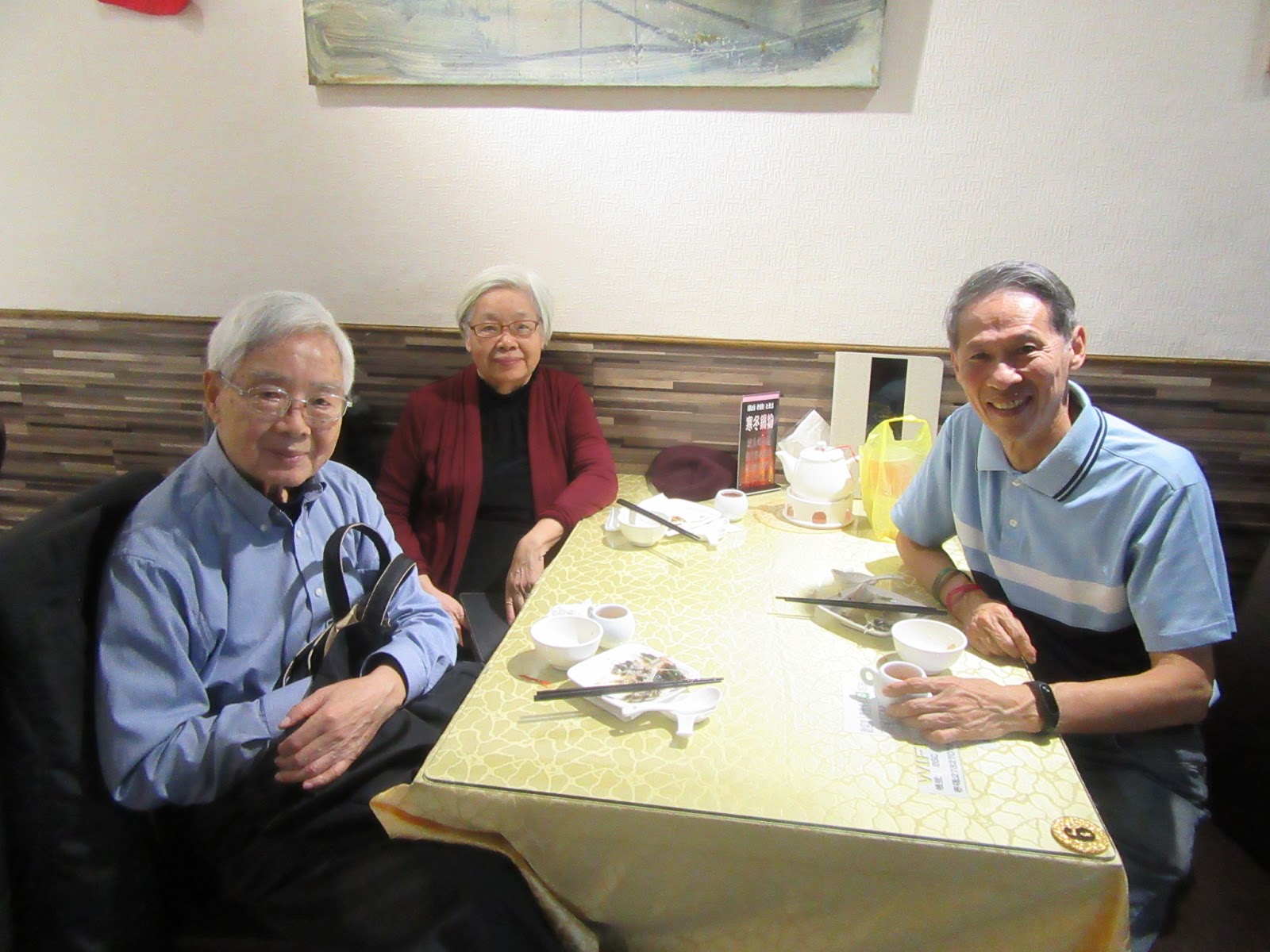
My father 父親, my mother母親 and Mr. Bangli Ho 何邦立.
My translation of my father's memories of his life : Father's oral, Mr. Ho Bangli's records. This article was publishing at the [Taiwan Biography literature] 660 edition in 2017 May.
The Turning Points of (My) Life
Peng-yuan Chang
After the outbreak of the Sino-Japanese War in 1937, China was caught up in a terrible battle. The military hygienic condition was simple and crude, to say nothing about the equipment. Under the leadership and a clarion call from professor Lin Ke-sheng (Robert Kho-Seng Kim), a group of doctors of the US-UK Sector in the Peking Union Medical Hospital, joined the Red Cross military rescue work. With the support of patriotic passion, they organized the Red Army ambulance corps and went to the front to support ambulances. At that time, work was hard to push forward due to a lack of medical staff in the military. Robert Kho-Seng Kim decided to proceed with training medical staff, at the same time with the work of medical treatment and rescue. The purpose of establishing the wartime military health personnel training center was to improve the military hygienic condition and to heal the wounded and rescue the dying.
In the summer of 1943, when I was 17 years old, one and half years after studying at the Guiyang province, Zheng Yi private junior high school, I went to a market to work as an apprentice. The age of 17 was not considered young at that time. In my mind, I was planing how to change my future. Do I want to be like this for my whole life? Do I want to be a small business man? That is not what I want. I want to change, to have a breakthrough. (Note 1)
I read an advertisement in the newspaper, from the enrollment brochure of the military department of the wartime military health personnel training center for "senior nursing career classes." It was written that as long as one had a junior high school graduation or equivalent education, one could take the exam, free tuition, provided food and accommodation, also there were books to read, why not go for it. In addition to the four years of military education, one had to retake the high school curriculum, Mandarin, English, Math, Physics and Chemistry, and then formally receive the vocational nursing training, including one year of hospital internship. Later I understood the purpose of the trouble taken of Robert Kho-Seng Kim and others, that they had no alternative but to reduce the eligibility of admission. In the first half of the twentieth century, China was all far behind. Education was not popularized. It was even worse during the turmoil of war. According to the standard of medical schools, there was simply no way to find senior high school graduates. So they had to lower the standard to junior high school graduates. I was very pleased that I was able to apply for the same degree of education, and was admitted after having one exam. This is the first turning point of my life.
My Guiyang fellow friend, Wu Shi (note 2) was two years older than me. We have the same academic background, and he also had been an apprentice in the market. He also saw the advertisement in the newspaper of the enrollment brochure one month later than me. But this time it was calling for military doctor classes. The admission criteria was the same as the nursing classes, but giving 9 years of education by stages. Two years in school, distributed to hospital work for one year, by such for three stages of education achievement to become a qualified doctor. These were a group of doctors of the UK-US sector who were involved with the great plan of military medical career. They were devoted to revitalizing the military medical profession, to strengthen the health of the Chinese military men of the air force, army and navy. They wanted everyone to be healthy and strong. Before establishing a country one must establish the military, so they can take on the great cause of defending the country. We were accepted by the school with one month difference. Same education background, yet one for doctor training, one for nursing training, different path, our fate has been designated since then, nothing can be changed by ourselves.
The wartime military health personnel training center was located at Tu Yun Pass (see the hand sketch) in the outskirts of Guiyang city, Guizhou province, next to the Chinese Red Cross Ambulance Corps. The Army General Hospital was also located at Tu Yun Pass, coinciding with the teaching of the training center. The school was at a hollow surrounded by mountains to avoid Japanese bombing. All the equipment in the school was American style. Robert Kho-Seng Kim, Mei-yu Chou and others were fund-raising in the United States. Americans sympathized with the Chinese who resisted against Japan in the war. They organized medical organizations to support China. They donated medical equipment, microscopes, etc., The training center became a well-equipped medical training institution during the war period.
In November 1948, when the country had a sudden change, the National Defense Medical Center received a higher order to move to Guangzhou. Soon, we received another order to go to Taiwan directly. I was in the first group in February of 1949 taking the Anda steamship to the Taiwan water district. At that time I was a lieutenant officer. In 1950 I passed the National Health Administration Advanced Examination with the first grade and promoted to captain. However under the atmosphere of depression in the military at that time, I wanted to leave the military and go to school to study. In 1952 I passed the exam and entered the Department of History and Geography in the Taiwan Provincial Normal Institute (Fourth and Fifth grade) and legally retired from active military service. I took off the tiger skin and later also studied at graduate school. I stumbled into history research through serendipity. This was my second turning point of life.
----------------------------------------------------
Note 1: Mr. Peng-yuan Chang was born in 1926 at Guiyang city, Guizhou Province, which has been described as "there never were three sunny days in a row, three square feet of level land, or three cents of silver in people's pockets." He studied at the private Zheng Yi primary school and Zheng Yi junior high school. Due to the war of resistance against Japan, he joined the military and entered the military medical center. He followed the military centers move to Taiwan in 1949. After serving in the military for 9 years, he took up books and finally became a famous Chinese modern history scholar. In 1993, Mr. Chang documented an interview of his teacher Dr. Mei-yu Chou at Academia Sinica. This document not only kept the historical records of the military medical training center, the National Defense Medical Center's establishment and move to Taiwan, and the records of Mr. Robert Kho-Seng Kim, but also kept the great story of the relationship between teacher and student which has passed by word of mouth with admiration.The wartime military health personnel training center was located at Tu Yun Pass (see the hand sketch) in the outskirts of Guiyang city, Guizhou province, next to the Chinese Red Cross Ambulance Corps. The Army General Hospital was also located at Tu Yun Pass, coinciding with the teaching of the training center. The school was at a hollow surrounded by mountains to avoid Japanese bombing. All the equipment in the school was American style. Robert Kho-Seng Kim, Mei-yu Chou and others were fund-raising in the United States. Americans sympathized with the Chinese who resisted against Japan in the war. They organized medical organizations to support China. They donated medical equipment, microscopes, etc., The training center became a well-equipped medical training institution during the war period.
At the beginning of school education, there were three months of basic military training by the instructors from the Republic of China Military Academy. The student brigade was staying on the hills, sleeping on a wide bed for a number of people with upper and lower levels in the barracks. No water, everyday we walked half an hour to White Sand Bay to take a half barrel of water back. At that time there were no cotton padded coats to wear in the winter time, until summer we received the cotton padded coats. Thin in the winter, thick in the summer, we dressed strangely. The sanitation was poor then, everyone had lice, every two months we went to the lice elimination station to kill lice for one time. Clothing were cooked in boiling water and sun dried to sterilize. As for the captain Zheng Yang and other officers who were taking care of food, they reduced the quantity of food from 4 dishes 1 soup to 3 dishes, to 2 dishes, to 1 dish, and to no dishes. There was corruption such as deducting grain, stealing weight, etc. giving people a bad image. After finishing the military training and going back to school, the food was greatly improved. At that time, porridge plus butter (oil from boiled cattle bones), plus salt and some hot pepper was considered very delicious. There was an additional dish once every three months. The hardships of life during war was hard to imagine by people now.
Speaking of the teachers and equipment of the training center, which were a team of medical experts summoned by Robert Kho-Seng Kim. Robert Kho-Seng Kim was the British doctor of medicine, an internationally renowned physiologist. Those who followed him were the top elite of the medical profession at that time. Chih-Teh Loo (1901-1979) was his deputy, a doctor of medicine, a person with administrative talent. Xian-lin Chang (1902-1969) was a surgical expert, who was well known by all Chinese because he had magical hands for surgery. Shoukai Chou (1906-1970) specialized in internal medicine, well known at home and abroad. An-chang Liu (1897-1971) was a physiologist, and the academic director. Shao-wen Lin (1907-1990) was the director of the department of medicine, a biologist. Mei-yu Chou (1909-2001) was the director of the department of nursing. She studied in the US. Above are merely few examples of the directors of different departments. Most of them returned from studying abroad and had many years of teaching experience at the Union Medical College.
The images of the teachers are still fresh in my mind even until now. Director Chih-Teh Loo was always wearing a military uniform, long boots looking very handsome. Director Mei-yu Chou did not wear a military uniform but rather a chi-pao (traditional Chinese robe). She was about the age of 30 something, still single, dressed like a mature young lady. Director Shao-wen Lin was a great teacher. He taught his classes well. His wife, Yao-chun Jiang, who graduated from Yenching University, was an English teacher. Our classes of medical and nurse were combined, and she taught us children's songs of English that established our foundation of English. An-chang Liu was the educational administration director, who's teaching was not lively. I remember one time students were not wearing shoes, we all entered the classroom barefoot and asked him for shoes (the prosthetic factory was making leather shoes which looked exquisite); and we saw him just simply lift his leg and showed the soles of his shoes, as the open mouth of a fish. Students suddenly felt so ashamed, too ashamed to show our faces. Yong-mao Liu specialized in health engineering, and was the director of the prosthetic factory. His left fingers were cut off. The Peking Union Medical College Hospital had male nurses. Our department of nursing had male teachers as well, but I cannot remember their names. I did not have lessons with Xian-lin Chang, and did not seen Robert Kho-Seng Kim at the training center, he had left school and gone on expedition to Yun Nan and Burma.
Speaking of the teachers and equipment of the training center, which were a team of medical experts summoned by Robert Kho-Seng Kim. Robert Kho-Seng Kim was the British doctor of medicine, an internationally renowned physiologist. Those who followed him were the top elite of the medical profession at that time. Chih-Teh Loo (1901-1979) was his deputy, a doctor of medicine, a person with administrative talent. Xian-lin Chang (1902-1969) was a surgical expert, who was well known by all Chinese because he had magical hands for surgery. Shoukai Chou (1906-1970) specialized in internal medicine, well known at home and abroad. An-chang Liu (1897-1971) was a physiologist, and the academic director. Shao-wen Lin (1907-1990) was the director of the department of medicine, a biologist. Mei-yu Chou (1909-2001) was the director of the department of nursing. She studied in the US. Above are merely few examples of the directors of different departments. Most of them returned from studying abroad and had many years of teaching experience at the Union Medical College.
At the end of 1944 one group from the Japanese army once invaded southern Guizhou, captured Du Mountain, approached Duyun, Tu Yun Pass was threatened. The school first evacuated the medical students to Chong-qing. That was during December, icy cold. The walking, after two days, had not passed Wu river yet. There was news heard that the Japanese had retreated. We went back to school. I remember when we were ready to evacuate, everyone got a bottle of vitamin B (in order not to leave it behind to the enemy). The director of the nursing department, Mei-yu Chou talked to everyone: "I do not know if we will have a chance to meet again after this evacuation, but you must remember this, we will always be Chinese" This endeavor's farewell talk is still fresh in my mind after more than 70 years. I therefore developed deep feelings for the nursing division.
In August 1945, the Japanese surrendered and the war ended. The next summer, as for the plan to rehabilitate the military medical education system, the training center moved students from Guiyang to Shanghai. Six people in one ambulance, a total 50 cars in a mighty formation. Everyday we drove 10 to 20 kilometers (due to if one car broke down, the rest needed to stop and wait for repairs and then go on the road again together). From Guiyang, passing Hunan, we turned south to Jianxi, and to Wuyi in Zhejiang province, passing Hangzho, it took 56 days to arrive at the Shanghai river bay. In Shanghai, we continued our last year of education. In the autumn of 1947, the first class of the senior nursing profession had 13 graduates. I stayed at the nursing department as an assistant teacher.
In June 1947, the Wartime Health Personnel Training Center merged with the Army Medical College and was renamed the National Defense Medical Center at Shanghai River Bay. Robert Kho-Seng Kim was the director of the Army Medical bureau and the Dean of the Medical Center. The National Defense Medical Center became a well known medical center in China. As a result of the National Defense Medical Center becoming a standard medical university, the original education curriculum had to change. Since then, they formally recruited high school graduates. When in Shanghai, I saw Mr. Robert Kho-Seng Kim my first time.
In June 1947, the Wartime Health Personnel Training Center merged with the Army Medical College and was renamed the National Defense Medical Center at Shanghai River Bay. Robert Kho-Seng Kim was the director of the Army Medical bureau and the Dean of the Medical Center. The National Defense Medical Center became a well known medical center in China. As a result of the National Defense Medical Center becoming a standard medical university, the original education curriculum had to change. Since then, they formally recruited high school graduates. When in Shanghai, I saw Mr. Robert Kho-Seng Kim my first time.
The merge process of the UK-US sector Wartime Health Personnel Training Center and the Germany-Japan sector Army Medical College was not smooth. This was due to the Army Medical College's self Identity as an orthodox college, with a long history, but lorded over by the Health Personnel Training Center. Robert Kho-Seng Kim, who was overseas Chinese, had obstacles with the Chinese language. The students of the Army Medical College were against him very intensely then, causing campus upheaval, and putting posters against Kim. I remember a poster saying: "Foreigners drink coffee, We Chinese take tea." got into a hot dispute that alerted the chief of the General Staff Headquarters, Cheng Chen, to come to the school and call to admonish the students. Those who broke the school rules would be expelled. This issue then was finally put to rest. (Note 3)
In November 1948, when the country had a sudden change, the National Defense Medical Center received a higher order to move to Guangzhou. Soon, we received another order to go to Taiwan directly. I was in the first group in February of 1949 taking the Anda steamship to the Taiwan water district. At that time I was a lieutenant officer. In 1950 I passed the National Health Administration Advanced Examination with the first grade and promoted to captain. However under the atmosphere of depression in the military at that time, I wanted to leave the military and go to school to study. In 1952 I passed the exam and entered the Department of History and Geography in the Taiwan Provincial Normal Institute (Fourth and Fifth grade) and legally retired from active military service. I took off the tiger skin and later also studied at graduate school. I stumbled into history research through serendipity. This was my second turning point of life.
I would like to present this memory to commemorate Mr. Robert Kho-Seng Kim's 120th birthday and the 70th anniversary of the establishment of the Department of Nursing of the National Defense Medical Center.
(Mr. Pen-yuan Chang's oral history at Institute of Modern History, Academia Sinica, Taipei. 2017.01.04,Bang-li Ho arranged.)
Note 2: Doctor Wu Shi (1924-1999) was from the same village as Mr. Peng-yuan Chang. They were fellow officers and close friends. When Mr. Chang was studying at the Taiwan Provincial Teachers’ College, now the National Taiwan Normal University, Doctor Wu financially and spiritually supported Mr. Chang from time to time. When Mr. Chang received his masters degree in 1960, Doctor Wu gave a jade seal as gift of congratulations. This seal is still used by Mr. Chang. Doctor Wu Shi was an orthopedic doctor, specializing in leprosy diagnosis and treatment with tremendous contribution.
Note 3: The Army Medical College students started a campus upheaval in 1934 when the director of the department of Health, Rui-heng Liu, who was also the president of the Army Medical College in Nanjing, changed the education system from the German-Japan system to the UK-US system, dismissed all the faculty, and resolutely stopped classes for two weeks. He also placed the 8 student representatives in confinement for a week at the Military Academy. After waiting for the campus upheaval to quiet down, he made bold decisions to carry out drastic reforms. As a result of the war of resistance against Japan, the Army Medical College (UK-US system) moved to Guangzho and merged classes with the Guangdong Army Medical College (German-Japan system). Again due to the teaching language, this caused a small scale strike. Jian Chang, the director of the Guangdong Provincial Education Department, moved the Guangdong Army Medical College to west to Guilin, settled at Anshun, and continued using the German-Japan education system. In 1947, Robert Kho-Seng Kim merged two schools in Shanghai. The education system was based on the system used in the Health Personnel Training Center. The newly established National Defense Medical Center was using the UK-US educational system, but the graduation numbers and the anniversary of the founding of the school still followed the original Army Medical College's November 24th.
-----------------------------------------Note 3: The Army Medical College students started a campus upheaval in 1934 when the director of the department of Health, Rui-heng Liu, who was also the president of the Army Medical College in Nanjing, changed the education system from the German-Japan system to the UK-US system, dismissed all the faculty, and resolutely stopped classes for two weeks. He also placed the 8 student representatives in confinement for a week at the Military Academy. After waiting for the campus upheaval to quiet down, he made bold decisions to carry out drastic reforms. As a result of the war of resistance against Japan, the Army Medical College (UK-US system) moved to Guangzho and merged classes with the Guangdong Army Medical College (German-Japan system). Again due to the teaching language, this caused a small scale strike. Jian Chang, the director of the Guangdong Provincial Education Department, moved the Guangdong Army Medical College to west to Guilin, settled at Anshun, and continued using the German-Japan education system. In 1947, Robert Kho-Seng Kim merged two schools in Shanghai. The education system was based on the system used in the Health Personnel Training Center. The newly established National Defense Medical Center was using the UK-US educational system, but the graduation numbers and the anniversary of the founding of the school still followed the original Army Medical College's November 24th.
(Peiyou wrote in 5/31/2017: Now I remember father told me about Doctor Wu many times in Taiwan and while father visited NYC in 2001. Father's trip to NYC was related to taking care of relics of Doctor Wu. I end up inherit one catalog of the guqin (瀟湘快雪漁樵夢) that Doctor Wu once owned and the last page has his melancholy hand writing in red ink.)


------


